
Ten minutes a day: vocabulary that works
How to get our students to study vocabulary has been a long-standing question for us. Until now, our approach was to have students read a passage first, then pick out and organize the words they didn't know. Words learned in context stay longer, but the problem was that very few students could actually keep up with that method.
Reading a passage, finding unfamiliar words on your own, and looking up and organizing their meanings takes more focus than it seems. As a result, some students gave up entirely, and many of those who did it just filled in the form and moved on. We concluded that while it is the best method for students who work hard, for everyone else it may be asking for an ideal.
Beyond that, most students look at a word list once and never come back to it. A word that seemed memorized that week is gone a few weeks later. What students need is not a way to see more words at once, but a structure that shows a small number every day and brings each one back just as it is about to be forgotten.
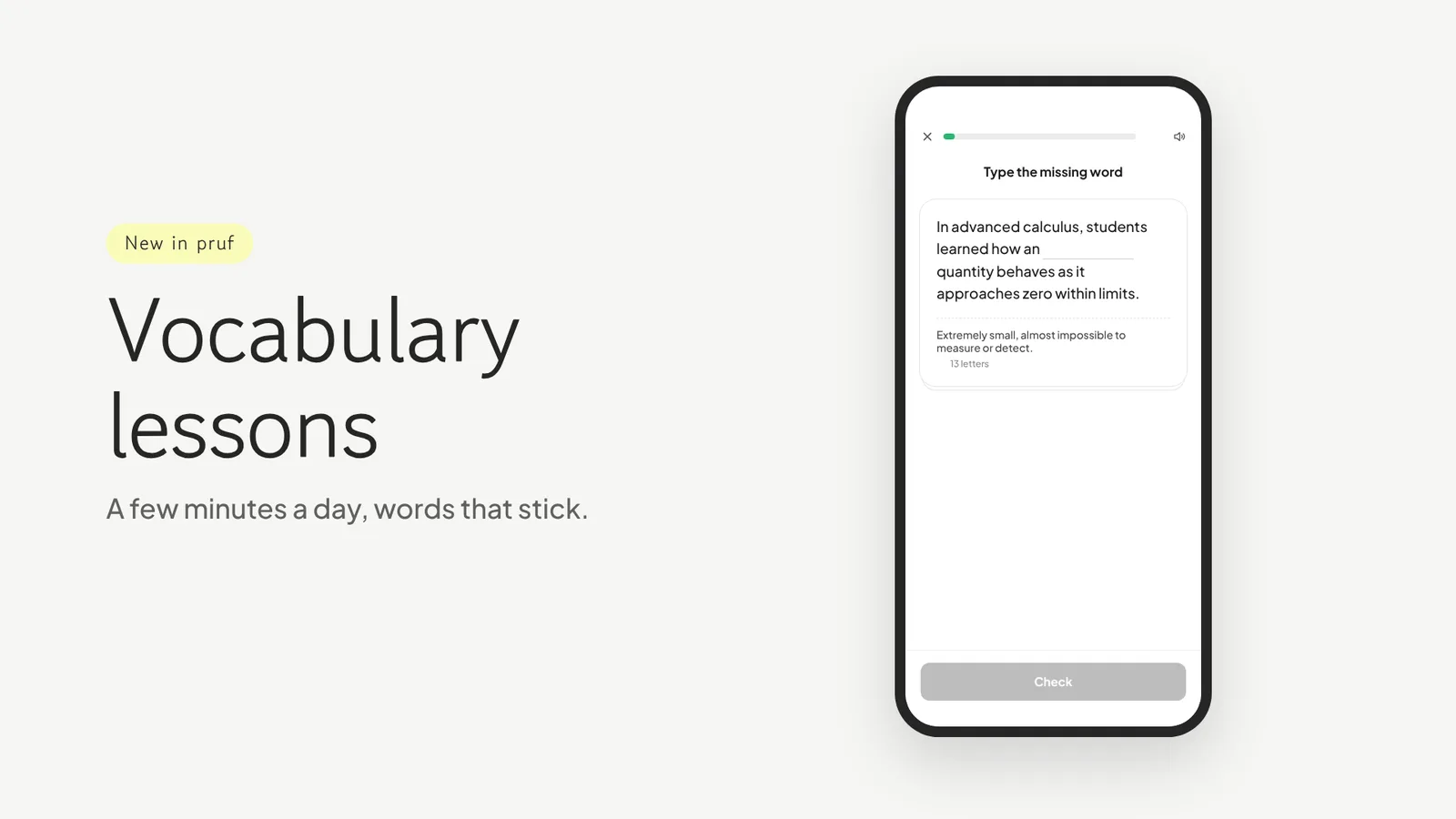
So we changed our approach. The new vocabulary feature in PRUF is built for about ten minutes a day, and it is easy to do on a phone.
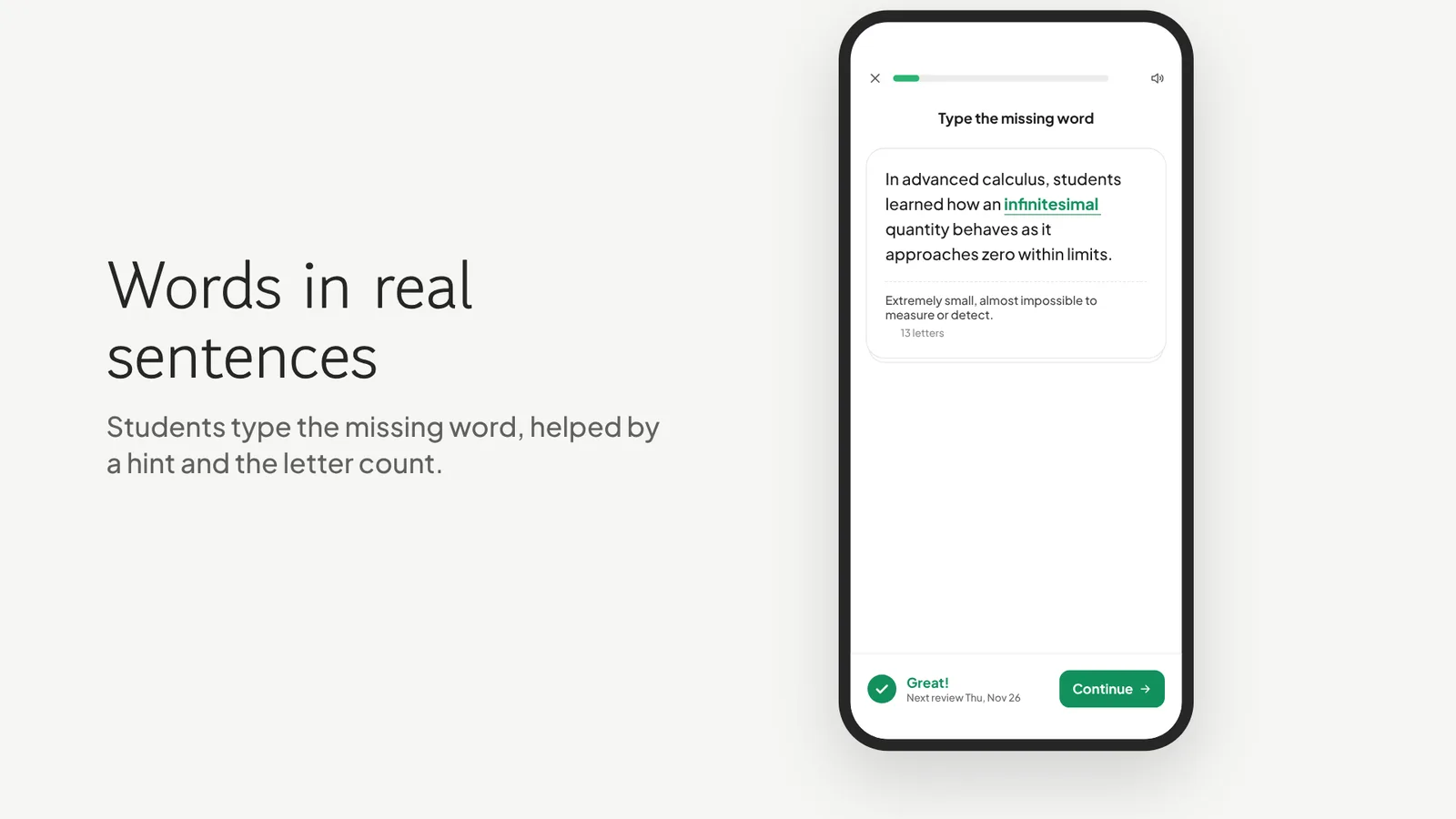
Students type the word that fills the blank in a real sentence. A hint and the letter count are given, so it never feels impossible, and because there is no guessing, it is not easy to skip through either.
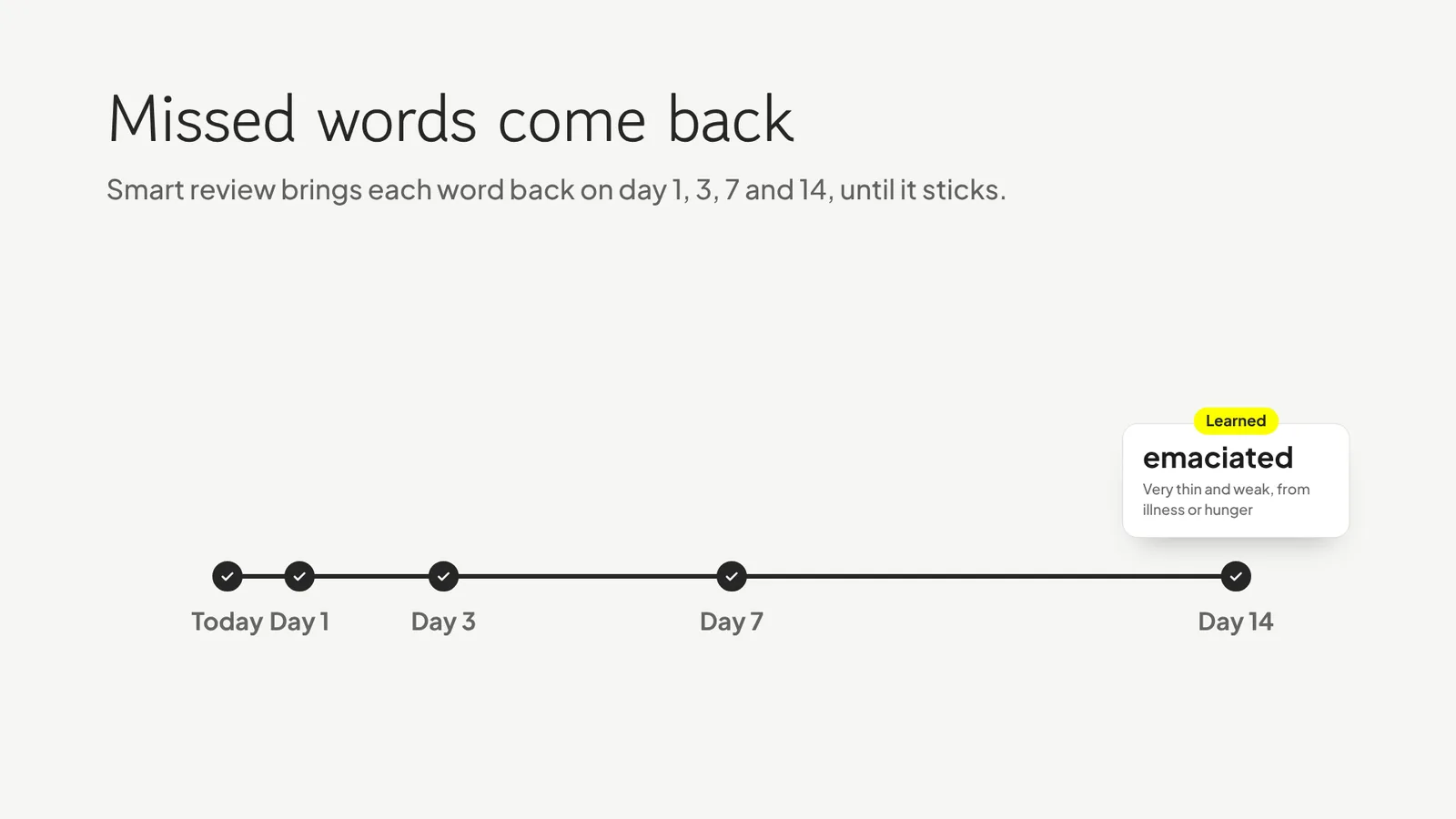
Words a student gets right and words they miss come back on different cycles. Missed words return after 1 day, 3 days, 7 days and 14 days, and for words they get right, the interval keeps growing. Because it builds up instead of being a list you see once, the number of words a student remembers grows over time.
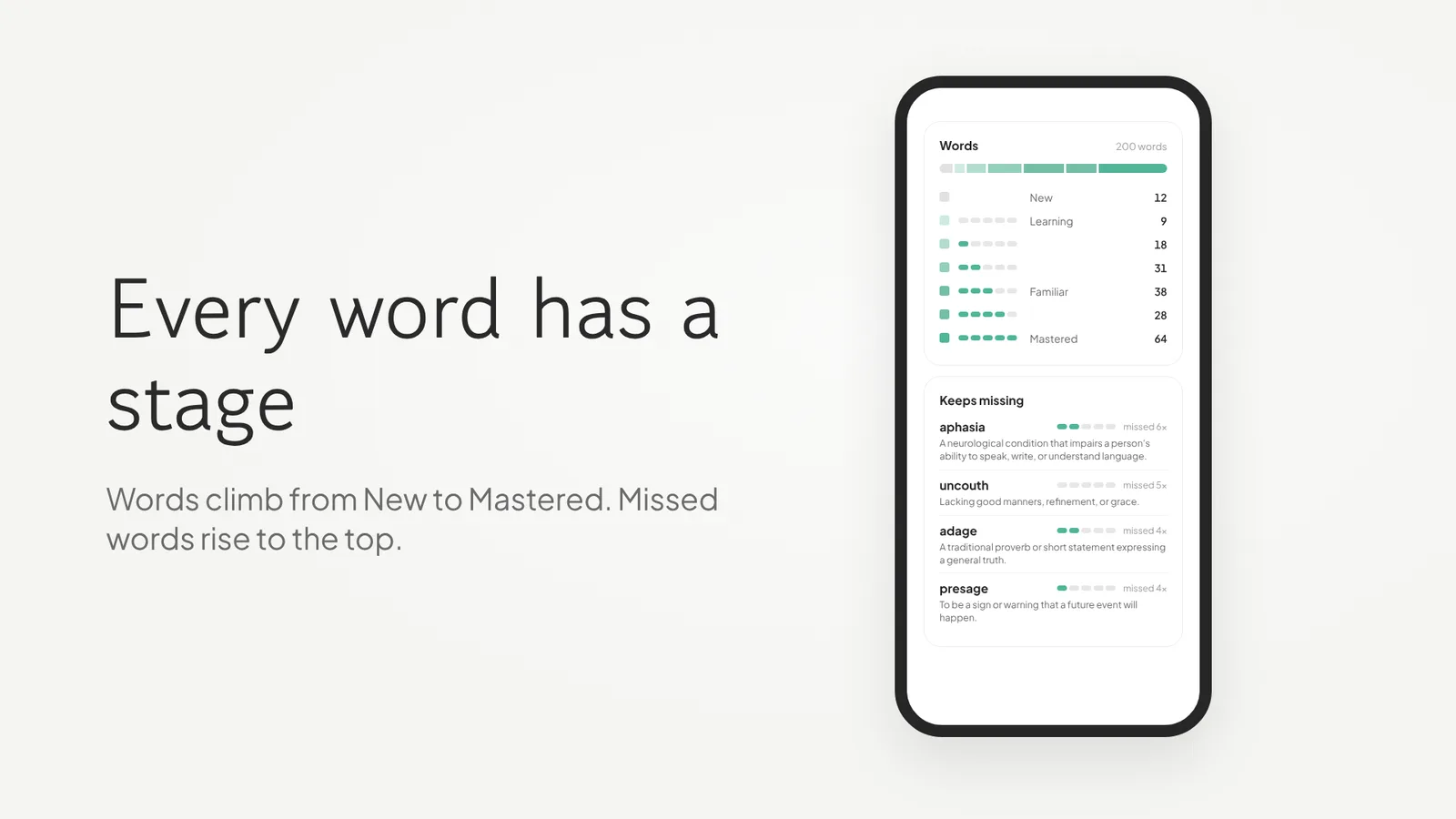
Each word is tracked through four stages: New, Learning, Familiar and Mastered. One screen shows which stage each word is in and which words are missed most often. Because the most-missed words rise to the top, both the student and our team can see right away which words need more time.
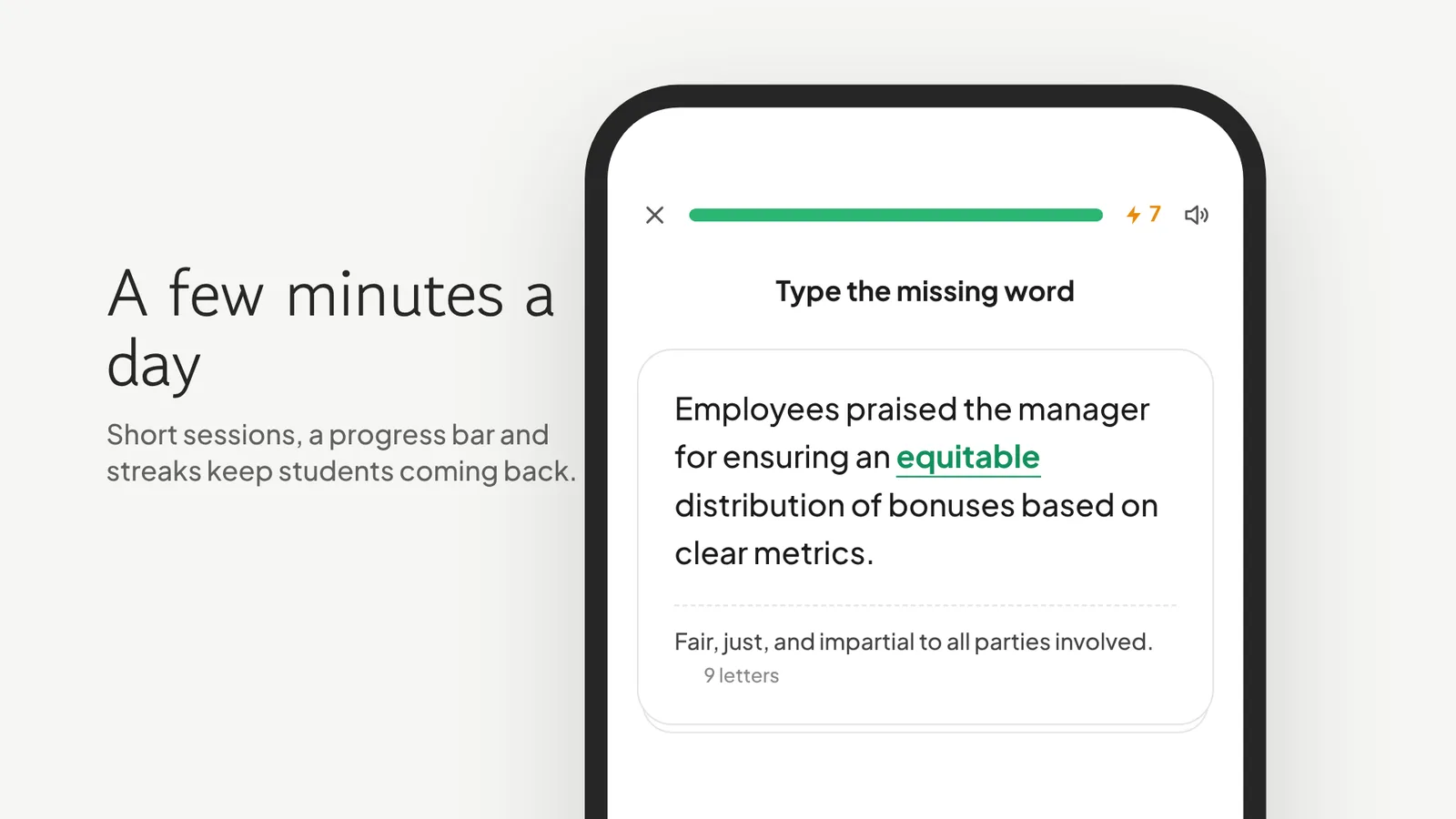
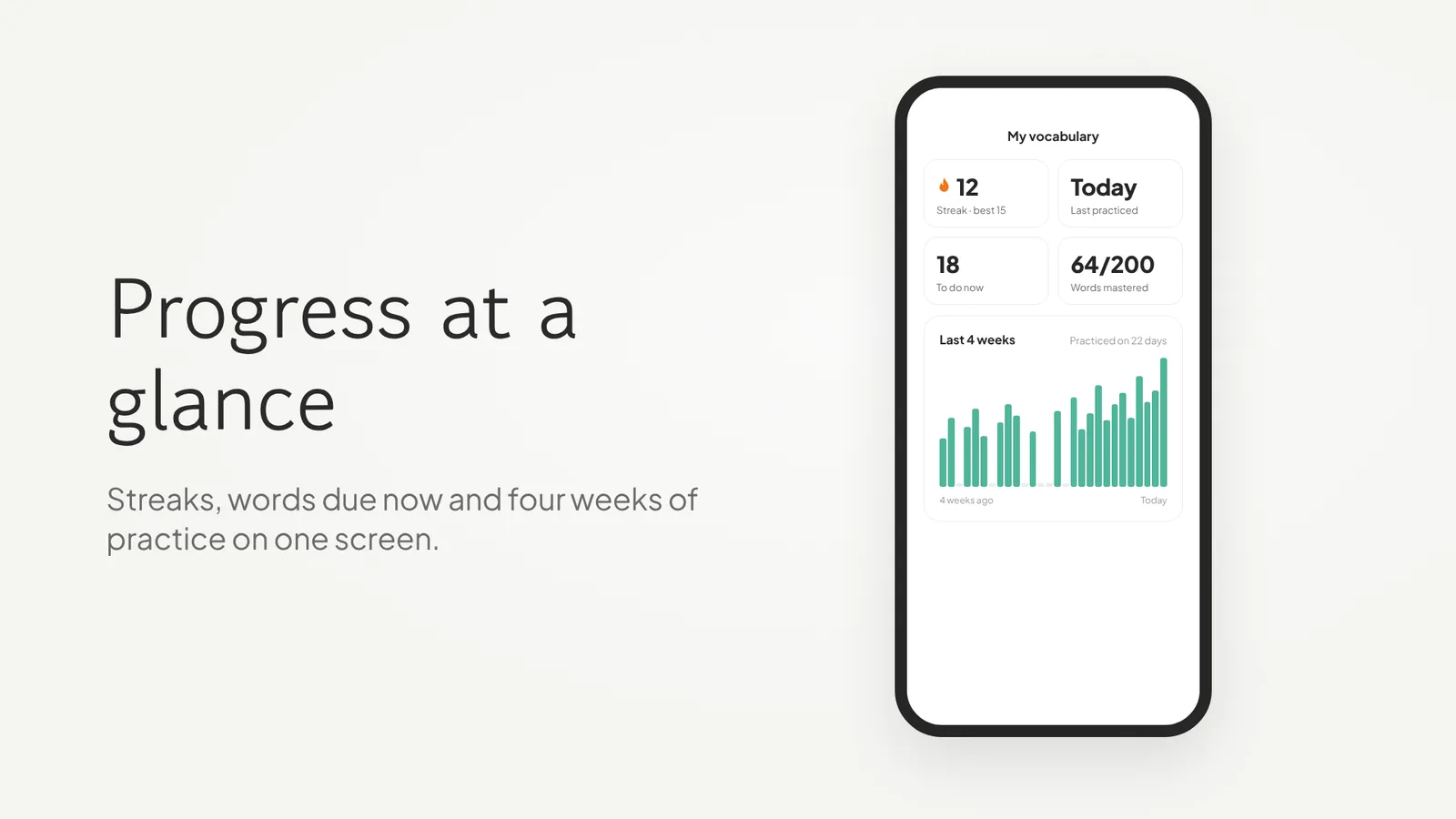
The shorter sessions and the streak counter are there to bring students back every day. Students can also see at a glance how much they studied over the last four weeks and how many reviews are waiting right now.
Word lists depend on the class. SAT students study 4,000 essential SAT words, selected after analyzing past SAT® exams. Students in our middle and high school English classes and in 1:1 academic management study the words they need to know at their grade level.
Of course, one new feature will not raise anyone's skills overnight. But we believe the difference between a student who puts in ten minutes every day and one who does not will be clear within a single semester.
Book a Free Consultation
Online · Free
- See where the student stands today, based on current grades, coursework, and study habits
- A recommendation for the type of management the student needs now, and where to begin
- A per-student solution blueprint delivered after the consultation
Related reading
SAT® is a registered trademark of the College Board, which does not endorse YEON Education. Figures shown in the app screens are examples.